Play Welcome to Free Will
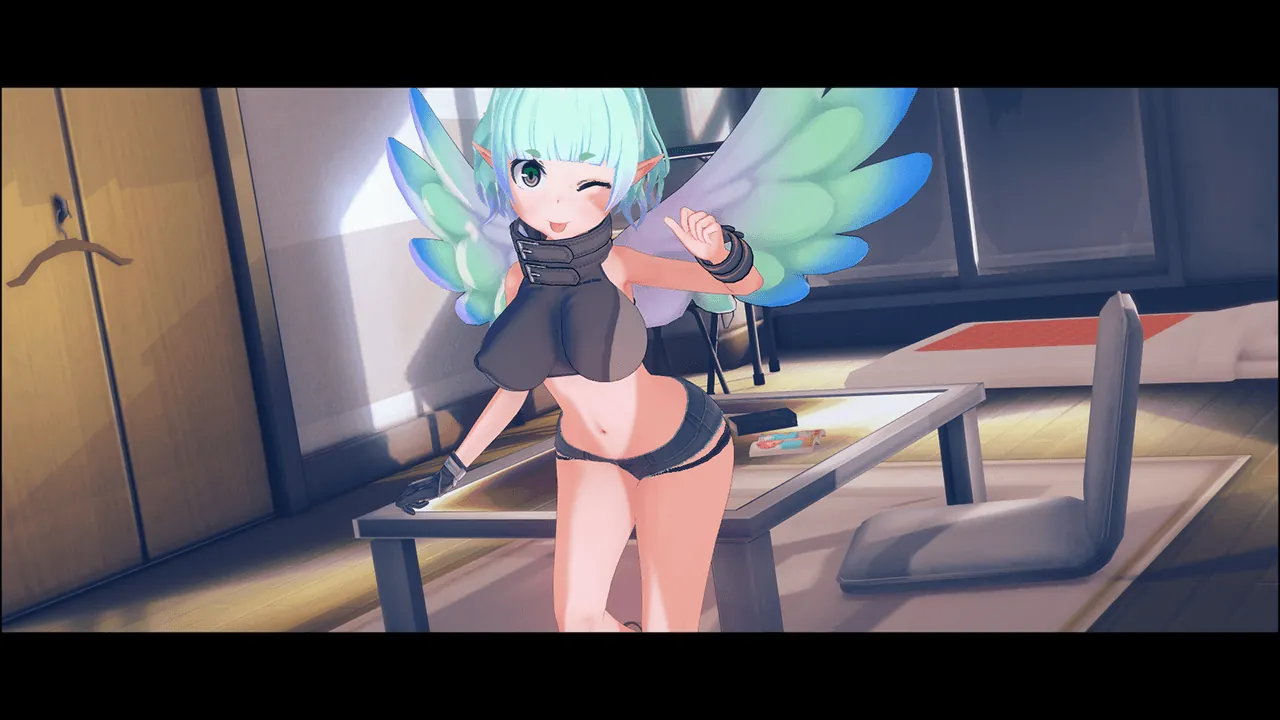
Welcome to Free Will Screenshots


















Welcome to Free Will review
A practical, story-driven look at the adult game Welcome to Free Will, its choices, characters, and gameplay experience
Welcome to Free Will is an adult visual novel that builds its entire experience around your decisions, branching storylines, and character relationships. Players searching for this title usually want to know what kind of game it is, how deep the choices really go, and what they can expect from the story, visuals, and replay value. In this guide, I’ll walk you through how Welcome to Free Will actually plays in practice, share personal-style impressions from a full playthrough, and give you practical tips to help you get the most out of your first run without spoiling the main twists.
What Is Welcome to Free Will and How Does It Play?
So, you’ve heard the name, maybe seen some intriguing screenshots, and now you’re wondering: what exactly is Welcome to Free Will, and how do you actually play it? 🤔 If you’re picturing a frantic shooter or a complex strategy sim, let me stop you right there. At its heart, the Welcome to Free Will game is a deeply personal, choice based story game set in a familiar, modern world. You step into the shoes of a protagonist navigating the complexities of everyday life—new surroundings, social circles, and the delicate dance of building relationships. The entire experience is powered by your decisions, leading to a unique story that feels distinctly yours. This Welcome to Free Will overview will break down everything from its basic premise to the intricate mechanics that make its branching paths so compelling.
What is Welcome to Free Will about?
Imagine moving to a new part of the city or starting at a new campus. There’s that mix of excitement and uncertainty, a blank slate waiting to be filled. That’s your starting point in Welcome to Free Will. The game doesn’t drop you into a fantasy epic or a sci-fi war; it grounds you in a relatable, modern setting where the drama is interpersonal and the stakes are emotional. 🏙️
The core narrative follows your character as you settle into this new life. You’ll meet a cast of potential friends and love interests, each with their own personalities, backgrounds, and schedules. Your job isn’t to fight monsters, but to manage your time, choose who to spend it with, and decide what to say in countless conversations. The “adult” aspect of this adult visual novel is woven directly into this framework. It’s not a separate feature; romantic and intimate scenes are presented as natural progressions of the relationships you cultivate, earned through meaningful choices and built trust. The appeal lies in that powerful interplay: your choices drive the story, the story deepens the characters, and those character moments form the rewarding core of the experience.
Before we dive into how a single choice can echo through hours of gameplay, let’s map out a typical session. The Welcome to Free Will gameplay loop is intuitive but rich with possibility:
- Read Scenes: The story unfolds through beautifully illustrated character art, backgrounds, and dialogue. Think of it like reading a graphic novel where you control the protagonist’s voice.
- Make Choices: This is the engine of the game. Prompts will appear, asking you to decide what to say or do. Do you offer comforting advice or a humorous deflection? Do you spend your Friday night studying or accepting an invitation out?
- Manage Routes & Stats: Your choices subtly influence hidden “affection” points with characters and sometimes other stats (like Confidence or Charm). These values act as keys, unlocking new dialogue options and, ultimately, determining which character’s path you end up on.
- Unlock Content: As you successfully navigate a relationship path, you’ll progress through story scenes and unlock special moments, seeing the direct results of your attention and choices.
How does the choice and consequence system work?
This is where the Welcome to Free Will gameplay truly shines. The game’s branching narrative isn’t about one massive, obvious “good or evil” decision at the end. It’s a tapestry woven from dozens of small, seemingly innocuous threads you pull from the very beginning. There is no traditional combat, but don’t mistake that for a lack of tension. The tension here is social and emotional. A thoughtless comment in Week 1 can close a door you didn’t even know was there by Week 3.
Let me give you a personal example from my first playthrough. Early on, I met a character who was being overly critical of a mutual acquaintance. The game presented me with a few options: agree diplomatically, challenge them directly, or simply change the subject. Trying to be a “nice guy,” I chose the diplomatic route, gently agreeing to keep the peace. Fast forward several in-game days. That same character came to me with a gossipy rumor, assuming I’d be an eager participant. My previous choice had silently labeled me in their mind as someone who wouldn’t push back. It completely shifted the dynamic of our entire relationship, leading me down a route where I was seen more as a passive follower than an independent friend.
It was a five-second choice that reshaped five hours of story. That’s the power Welcome to Free Will gives you—and asks of you.
This system demands that you slow down. You can’t just click through dialogue; you have to think about the person you’re talking to and the person you want to be. The game excels at creating branching routes in Welcome to Free Will that feel genuinely distinct, not just different endings slapped onto the same journey. Pursuing one character might involve a lot of evening social events, while another might require you to focus on daytime academic or work-related activities. Your schedule and your choices are inextricably linked.
In terms of pacing, a first playthrough can be quite a commitment, easily spanning many hours as you soak in the story. Key decision points are sprinkled throughout, but the game is clever—sometimes you won’t know a choice was key until much later. This design is what makes replayability so high. Going back to see “what if?” is not a chore; it’s a revelation, often uncovering entirely new scenes and character dimensions you missed the first time.
Technically, the game supports this exploratory style well. The interface is clean, with clear menus for saving and loading. I found the save system to be a lifesaver, allowing me to bookmark moments before big decisions. An auto-read function lets you sit back and watch the story unfold, and a skip feature is invaluable for speeding through previously read text on subsequent playthroughs. While you can’t rewind a choice in the moment, the robust save system makes it easy to backtrack to a strategic point if you want to explore a different outcome.
Here’s a quick breakdown of the main systems you’ll be engaging with:
| System | What It Does | Why It Matters |
|---|---|---|
| Dialogue & Action Choices | Presents key decision points that shape character perception and story direction. | This is your direct input. Every choice is a brushstroke on the final picture of your story. |
| Affection/Relationship Points | Hidden numerical values that track your standing with each major character. | Acts as a gatekeeper for story routes. High enough affection opens paths; low affection closes them. |
| Stat Checks | Certain choices require a minimum level in a trait (e.g., Confidence, Intelligence). | Adds a layer of role-playing. Your prior choices can build your stats, which in turn unlock new future options. |
| Schedule/Time Management | You often choose how to spend your time (e.g., work, go out, stay in). | Determines which characters you encounter and which story threads you have the opportunity to advance. |
Is Welcome to Free Will worth playing if you’re new to adult visual novels?
This might be the most important question for many readers: is Welcome to Free Will worth playing as your first foray into this genre? My resounding answer is yes, and here’s why. 🎯
If you’re new to adult visual novels, you might worry about steep learning curves or opaque mechanics. Welcome to Free Will avoids this. Its systems—making choices, watching relationships grow—are instinctive. The gameplay is about reading and deciding, things we all understand. The adult content is presented as a narrative outcome, not the sole goal, which makes the journey feel more substantive and less intimidating than in some more niche titles.
Compared to more linear visual novels, Welcome to Free Will places a heavier emphasis on the weight of your decisions and the tangible payoff of replaying. This can be incredibly satisfying if you enjoy seeing cause and effect in stories or love the “butterfly effect” concept in games. It feels active and engaging. Your investment in the characters directly translates to your success in their routes.
For a beginner, it serves as a perfect introduction to the potential of interactive storytelling. It teaches you to listen to characters, read between the lines, and consider consequences—all core skills for enjoying the broader genre. The clear UI and helpful features like a comprehensive scene gallery (which shows you what you’ve unlocked and hints at what you’ve missed) make the experience user-friendly.
So, is it worth it? Absolutely. It’s a polished, thoughtful, and deeply engaging choice based story game that uses its adult themes to enhance its character-driven narratives, not replace them. Understanding these core systems of choice and consequence is your key to unlocking everything the game has to offer. It sets the stage perfectly for diving into the specifics of building relationships, which is where the magic truly happens. In our next sections, we’ll get into the strategies for navigating those branching routes in Welcome to Free Will and connecting with its memorable characters. Your story is waiting to be written. ✍️
Welcome to Free Will stands out because it invites you to slow down, pay attention, and treat every choice as a meaningful step in your character’s journey. When you understand how its systems, pacing, and routes fit together, the whole experience becomes far more rewarding, especially on repeat runs. If you enjoy narrative-heavy games where relationships, consequences, and quiet moments matter more than fast action, Welcome to Free Will is an easy recommendation. Give yourself permission to experiment, replay key routes, and lean into the story paths that feel most interesting to you, and you’ll find there is much more here than first meets the eye.